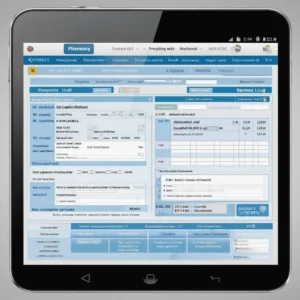
rxviz healthcare ppc agency

How RxViz Helps a Healthcare PPC Agency Boost ROI

A healthcare PPC agency operates in one of the most competitive and high-cost digital marketing environments. Every click matters, and maximizing return on investment (ROI) requires precision, speed, and complete visibility into campaign performance. While ad copy and targeting are essential, the hidden performance gains often come from understanding and optimizing the user journey.

This is where RxViz—a visualization platform for RxJS streams—can transform how healthcare PPC agencies plan, debug, and optimize paid search campaigns.

Understanding RxViz in Healthcare Paid Search Advertising

RxViz is well-known among developers for visualizing reactive programming flows in JavaScript—particularly those built with the RxJS library—but its potential goes far beyond traditional software engineering. At its core, RxViz takes streams of asynchronous events, such as button clicks, form submissions, or page scrolls, and turns them into clear, animated diagrams that show exactly when and how those events occur over time.

rxviz healthcare ppc agency

For a healthcare PPC agency, this capability is a game-changer. Paid search campaigns in healthcare often involve multiple touchpoints: a user clicks an ad, lands on a service page, reads testimonials, checks insurance coverage, then finally submits a form or books an appointment. Without visualization, tracking how users move through these steps can be a guessing game.

With RxViz, agencies can map the entire patient acquisition funnel—from the initial ad click to every subsequent interaction on the landing page. By directly visualizing these JavaScript-powered event streams, they can:

  • Detect bottlenecks where users abandon the process.
  • Confirm that all tracking scripts, conversion pixels, and event listeners are firing at the correct time.
  • Compare behaviors between audience segments, ad groups, or devices.
  • Ensure compliance with HIPAA by verifying that sensitive events are handled securely in real-time tracking flows.

This granular, real-time insight allows healthcare marketing agencies to spot and address friction points, ensure data accuracy, and make precise, data-backed adjustments that can significantly boost ROI. Instead of relying solely on analytics dashboards, teams can watch the actual flow of user behavior unfold visually, making optimization faster, more accurate, and more collaborative.

The ROI Challenges in Google Ads

Healthcare PPC campaigns face unique obstacles:

  • Complex User Flows: Patients may explore multiple service pages, reviews, insurance information, and FAQs before converting.
  • Strict Compliance Requirements: HIPAA and other regulations demand meticulous data handling and secure processes.
  • High Click Costs: In competitive healthcare niches, each click can be expensive, making wasted ad spend especially costly.
  • Long Decision Cycles: Patients often take longer to convert, requiring nurturing across multiple touchpoints.

Without visibility into how users interact with each stage of the funnel, agencies risk losing high-intent leads and wasting valuable ad budget.

How RxViz Transforms Funnel Optimization

1. Visualizing Conversion Paths

RxViz enables agencies to see exactly how PPC audiences interact with landing pages, calls-to-action, and multi-step forms. This real-time visualization highlights where patients drop off and where engagement peaks, enabling precise, data-driven optimizations.

2. Debugging Tracking Issues

Accurate conversion tracking is essential, yet it’s common for pixels to misfire or for events to be delayed or duplicated. RxViz’s visual timelines pinpoint where tracking fails, ensuring performance data reflects reality and that campaign adjustments are based on reliable metrics.

3. Testing Funnel Variations

Healthcare PPC agencies can simulate funnel changes before pushing them live. This could mean adding video testimonials, repositioning form fields, or restructuring landing page sections to improve trust and conversion rates.

4. Enhancing Cross-Department Collaboration

By turning complex reactive data flows into visual diagrams, RxViz bridges communication between marketing teams, developers, and compliance officers. Everyone works from the same data story, reducing misunderstandings and accelerating implementation.

5. Supporting Multi-Channel Attribution

Many healthcare PPC agencies run campaigns across Google Ads, Bing, and Meta Ads. RxViz can help visualize and compare data streams from different platforms, showing how each channel contributes to conversions.

Case Example: Reducing Drop-Offs in Appointment Booking

A healthcare PPC agency managing Google Ads and Microsoft Ads for a multi-location clinic noticed a steep drop-off between the landing page and the booking form. Despite strong click-through rates from both platforms, a large portion of high-intent visitors failed to complete the appointment booking process.

Using RxViz, the agency was able to visually map every step in the user journey across both ad channels, from the initial click to the form submission. The visualization quickly revealed two major issues:

  1. Slow-loading forms that frustrated mobile users.
  2. Excessive required fields that discouraged completions, especially for users coming from paid ads who were in a hurry.

By addressing these issues—optimizing form load speed, reducing unnecessary fields, and ensuring tracking fired correctly on both Google Ads and Microsoft Ads landing pages—the agency eliminated key friction points.

The results were immediate: form abandonment rates dropped significantly, and the clinic saw a 20% increase in booked appointments across both ad platforms. This improvement directly boosted ROI, proving the value of using RxViz for funnel optimization in multi-channel healthcare PPC campaigns.

Why This Matters for Medical Digital Marketing Agencies

  • Faster Optimization: Detect and fix funnel issues before they cause major budget waste.
  • Better Reporting: Visual insights make campaign results more tangible and convincing to clients.
  • Higher ROI: Each conversion improvement compounds returns over time.
  • Smarter Strategy: Use visual data to guide creative, targeting, and technical decisions.

Key Takeaways from Javascript Optimization in Google Ads

Boosting performance as a healthcare PPC agency requires more than effective ad targeting—it demands a deep understanding of the patient journey from click to conversion. RxViz provides that understanding, turning complex, multi-channel user flows into clear, actionable intelligence.

By integrating RxViz into their workflow, agencies can streamline optimization, enhance tracking accuracy, foster better team collaboration, and ultimately boost ROI in a competitive, high-stakes healthcare advertising landscape.

Get Back To The Home Page

How RxViz Helps a Healthcare PPC Agency Boost ROI Read More »
javascript seo agency fixing rendering and indexing problems

JavaScript SEO Agency: Fix Rendering, Indexing, and Crawlability Problems

SEO BRIEF — delete before publish | KW: javascript seo agency | Slug: /javascript-seo-agency/ | Secondary: best agency for javascript seo, javascript indexing issues, javascript crawlability, googlebot javascript rendering, is javascript bad for seo

A JavaScript SEO problem is a silent revenue leak. The site looks fine to visitors. It looks broken to search engines. Pages built by JavaScript frameworks, loaded asynchronously, or rendered client-side may not be crawled, rendered, or indexed by Google — which means they do not rank. A JavaScript SEO agency specializes in finding exactly where the breakdown happens and fixing it.

What JavaScript SEO Means

JavaScript SEO is the practice of ensuring that pages built or enhanced with JavaScript are correctly crawled, rendered, indexed, and ranked by search engines. It bridges the gap between how modern web frameworks build content — dynamically, in the browser — and how search engine crawlers prefer to consume it: as static, immediately available HTML.

Most SEO problems on JavaScript-heavy sites are not content problems. They are rendering problems. The content exists. Google just never sees it.

Common JavaScript SEO Problems

javascript seo agency fixing rendering and indexing problems
JavaScript SEO audit and rendering diagnostics

These are the most frequently diagnosed issues:

  • Content rendered client-side only — Googlebot sees an empty page on first crawl
  • Internal links generated by JavaScript — Googlebot cannot follow them to discover pages
  • Lazy-loaded content that requires scroll or interaction to trigger — never crawled
  • Infinite scroll pagination with no URL-based navigation — only the first viewport is indexed
  • Dynamic meta tags (title, description, canonical) set by JavaScript — may not be read correctly
  • JavaScript errors that prevent page rendering — silent but catastrophic for indexing
  • Excessive crawl budget consumed by JavaScript-heavy pages that take too long to render

How Google Crawls and Renders JavaScript

Google crawls in two waves. First, it fetches the raw HTML. Second, it queues the page for rendering — running JavaScript in a headless Chromium browser to see the fully rendered output. The problem: the rendering queue can take days to weeks. Until a page is rendered, only the raw HTML is indexed.

Server-side rendering eliminates this delay by sending fully rendered HTML on the first request. Static site generation pre-renders at build time. Both solve the crawling problem. Client-side-only rendering creates it.

Client-Side vs Server-Side Rendering for SEO

Client-side rendering (CSR): the server sends a minimal HTML shell and JavaScript builds the page in the browser. Fast for repeat visits, bad for initial crawl. Google can eventually index CSR pages after rendering, but the delay and potential rendering failures create consistent indexing risk.

Server-side rendering (SSR): the server processes JavaScript and sends complete HTML. Google crawls and indexes it immediately with no rendering delay. Next.js, Nuxt, Remix, and Astro all support SSR. This is the correct rendering strategy for any page that needs to rank.

Static site generation (SSG): pages are pre-rendered at build time. Fastest to serve, most reliable to crawl. Right for content that does not change per-user.

JavaScript SEO Audit Process

A proper JavaScript SEO audit involves: crawling the site with a JavaScript-rendering crawler (Screaming Frog with JavaScript rendering enabled, or Sitebulb), comparing the rendered DOM against the raw HTML response, identifying content, links, and metadata that are only present post-render, checking server logs to see which pages Googlebot actually crawled and rendered, and testing individual pages in Google Search Console’s URL Inspection tool.

The audit produces a prioritized list of issues by impact — pages with revenue potential that are not indexed get fixed first.

Best JavaScript Frameworks for SEO

Next.js: the strongest default for React applications targeting SEO. SSR, SSG, and ISR (incremental static regeneration) are all built in. The largest community, best documentation, and most production deployments.

Nuxt.js: the Next.js equivalent for Vue. Same SSR and SSG capabilities. Strong for Vue teams who need SEO.

Astro: ships zero JavaScript to the browser by default, hydrating components only when needed. Exceptional for content-heavy sites where SEO is the primary concern.

Remix: excellent data-loading patterns with server rendering by default. Strong for applications with complex data fetching requirements.

Avoid: pure Create React App, pure Vite SPA, or any client-side-only framework for pages that need to rank.

Frequently Asked Questions

Is JavaScript bad for SEO? JavaScript is not inherently bad for SEO. Client-side-only rendering without a proper strategy is bad for SEO. A Next.js site with server-side rendering is as indexable as a static HTML site.

Does Google crawl JavaScript? Yes, eventually. Googlebot runs JavaScript in a headless Chromium browser. The issue is timing — there is often a delay of days to weeks between first crawl and rendering. Pages awaiting rendering may not be indexed at all if rendering fails.

How long does a JavaScript SEO audit take? A focused audit of a mid-size site (up to 10,000 pages) typically takes 1 to 2 weeks. A large enterprise site with multiple JavaScript frameworks takes 3 to 6 weeks.

Can I fix JavaScript SEO problems without a full rewrite? Often yes. Dynamic rendering — serving pre-rendered HTML specifically to crawlers — is a viable fix without changing the application architecture. Server-side rendering can be added to existing React applications with Next.js incrementally. The right solution depends on the specific issues found in the audit.

JavaScript SEO Agency: Fix Rendering, Indexing, and Crawlability Problems Read More »

javascript consulting with senior expert for code review and architecture

JavaScript Consulting: When You Need a Senior Expert, Not a Development Team

A JavaScript consultant is not a developer who does consulting on the side. A real consultant brings senior-level architectural judgment, independent assessment, and the ability to diagnose problems in systems they did not build. You hire a consultant when you need answers, not code — when the problem is strategic, structural, or diagnostic rather than a feature backlog.

What JavaScript Consultants Actually Do

JavaScript consultants are typically engaged for: architectural review of an existing application, diagnosis of performance or scalability problems, technical due diligence before an acquisition, selection of frameworks and tooling for a new project, team capability assessment, and remediation planning for a codebase in trouble.

They deliver recommendations, documentation, and roadmaps — not always code. When they do write code, it is usually to demonstrate a pattern, validate a solution, or produce a reference implementation, not to complete a feature backlog.

When to Hire a JavaScript Consultant vs a Development Team

javascript consulting with senior expert for code review and architecture
Senior JavaScript consultant reviewing architecture decisions

Hire a consultant when you have a question that needs a senior answer: why is this application slow, what architecture should we use, is this codebase maintainable, how should we approach this migration? The output is clarity and a plan.

Hire a development team when you have a plan and need execution: build this feature, launch this product, implement this refactor. The output is shipped software.

What Good JavaScript Consulting Looks Like

A rigorous consulting engagement includes:

  • Discovery: understand the business problem before looking at the code
  • Current-state assessment: audit architecture, performance, testing, dependencies, and technical debt
  • Risk identification: what will break first and what are the consequences
  • Recommendations: specific, prioritized, and tied to business outcomes — not a wishlist
  • Implementation guidance: enough detail that your development team can execute without re-engaging the consultant for every decision
  • Follow-up access: defined availability for questions during implementation

Frequently Asked Questions

How much does a JavaScript consultant charge? Senior independent consultants charge $150 to $350 per hour in the US. Consulting firms with JavaScript specialization charge $200 to $500 per hour. Day rates are common for on-site or intensive engagements.

How long does a JavaScript consulting engagement take? An architectural review or performance audit typically takes 1 to 3 weeks. A full technical due diligence for an acquisition takes 1 to 2 weeks. Ongoing advisory relationships run on monthly retainers.

Can a JavaScript consultant help with SEO issues? A specialist in JavaScript SEO can. General JavaScript consultants typically focus on application architecture and performance, not search visibility. For JavaScript rendering and indexing problems, look for a consultant with explicit JavaScript SEO experience.

What should I prepare before hiring a JavaScript consultant? Access to the codebase (or a representative portion), documentation of the problem you are trying to solve, your current architecture overview, and a defined budget and timeline. Consultants work faster with better inputs.

JavaScript Consulting: When You Need a Senior Expert, Not a Development Team Read More »

custom javascript development services for enterprise and startups

Custom JavaScript Development Services: What They Include and When You Need Them

Custom JavaScript development means building software specifically for your requirements — not configuring a template, not installing plugins, and not working around the limitations of a general-purpose platform. It is more expensive than off-the-shelf solutions and worth it when generic tools cannot solve the specific problem your business has.

What Custom JavaScript Development Actually Means

Custom development starts with your requirements, not a vendor’s feature list. The codebase is written for your data model, your user flows, your integration landscape, and your performance requirements. You own the output.

The contrast: a SaaS subscription gives you a tool that thousands of companies use, customized through settings. Custom development gives you a tool that does exactly what you need, customized at the code level.

What Custom JavaScript Projects Look Like

custom javascript development services for enterprise and startups
Custom JavaScript solutions built for specific business needs

Common custom JavaScript engagements include:

  • Real-time dashboards pulling from multiple data sources
  • Internal business tools that replace manual spreadsheet workflows
  • Customer-facing SaaS products with unique feature requirements
  • E-commerce systems with complex pricing, inventory, or configuration logic
  • Data visualization applications for analytics and reporting
  • JavaScript performance layers built over legacy backends
  • Custom APIs and middleware integrating disparate systems

When Off-the-Shelf Is Enough and When It Is Not

Off-the-shelf is enough when: your workflow matches what the tool was built for, the vendor roadmap aligns with your future needs, integration with your existing stack is clean, and the cost of working around limitations is lower than building something custom.

Custom development is worth it when: your process is genuinely different from the norm, competitive advantage depends on capabilities no vendor offers, data privacy or compliance requires ownership of the stack, or the cumulative cost of SaaS subscriptions and workarounds exceeds what a build would cost.

JavaScript Technology Choices in Custom Development

Frontend: React dominates for complex UIs, Vue for lighter applications, Angular for enterprise systems with strong typing requirements. Vanilla JavaScript remains the right choice for simple, performance-critical code that does not justify a framework.

Backend: Node.js with Express or Fastify for REST APIs, NestJS for structured enterprise applications, tRPC for type-safe full-stack TypeScript systems. Databases are typically PostgreSQL or MySQL for relational data, MongoDB for document data, Redis for caching and sessions.

Frequently Asked Questions

How much does custom JavaScript development cost? A focused custom tool with clear scope typically costs $15,000 to $60,000. A full SaaS product from scratch costs $80,000 to $500,000+ depending on complexity, team size, and timeline.

Who owns the code after a custom development project? You should own the code — this must be explicit in your contract. Any work-for-hire agreement where intellectual property transfers to you on final payment is standard. Verify this before signing.

How long does custom JavaScript development take? A focused tool takes 6 to 12 weeks. A complete product takes 4 to 18 months. Timeline accuracy depends on scope definition at the start — vague requirements produce long timelines.

Can I maintain custom JavaScript code after the agency hands it off? Yes, if it was written with maintainability in mind: clear architecture, documentation, tests, and sensible dependency choices. Ask specifically about their handoff process and documentation standards before hiring.

Custom JavaScript Development Services: What They Include and When You Need Them Read More »

full stack javascript development with node react and real time apps

Full-Stack JavaScript Development: Node, React, and Real-Time Applications

Full-stack JavaScript development means one language, one team, and one mental model across the entire application — client, server, and data layer. That coherence reduces coordination overhead, simplifies deployment, and lets developers move faster across the stack without context-switching languages. For most modern web products, it is the default architecture.

What Full-Stack JavaScript Means in Practice

A full-stack JavaScript team writes React or Vue on the client, Node.js on the server, and often TypeScript across both. Frameworks like Next.js and Remix serve both client and server code from the same project. A single developer can work on a user-facing feature, the API endpoint it calls, and the database query that endpoint runs.

This contrasts with polyglot stacks where Python or Ruby handles the backend and JavaScript handles the frontend. Both work. Full-stack JavaScript trades some backend language expressiveness for team cohesion and shared tooling.

Real-Time JavaScript Applications

full stack javascript development with node react and real time apps
Full-stack JavaScript architecture with Node.js and React

Node’s event-driven, non-blocking architecture makes it the natural choice for real-time features: live notifications, collaborative editing, chat systems, streaming dashboards, and inventory updates that reflect changes without a page reload.

WebSockets and Server-Sent Events handle persistent connections. Socket.io simplifies WebSocket implementation with fallbacks. For high-scale real-time systems, Redis pub/sub or a message queue like RabbitMQ or Kafka sits behind the Node layer.

JavaScript for Retail Analytics and Dashboard Platforms

Retail analytics dashboards require: real-time data ingestion, performant chart rendering with large datasets, multi-storefront filtering, and role-based access control. JavaScript handles all of this — D3.js or Chart.js for visualization, React Query or SWR for data fetching with cache invalidation, and a Node backend aggregating from multiple data sources.

The challenge is not the UI. It is data pipeline latency and query optimization. A JavaScript development team building analytics platforms needs database experience as much as frontend skill.

JavaScript Mobile App Development

React Native lets JavaScript developers build iOS and Android apps from a shared codebase. It compiles to native components — not a WebView — and produces performance close to fully native development for most application types.

Expo, the most common React Native toolchain, handles build configuration, OTA updates, and device API access. For teams already using React on the web, React Native allows the same component patterns and state management libraries across mobile and web, dramatically reducing the cost of maintaining both.

Frequently Asked Questions

What is the best full-stack JavaScript framework in 2026? Next.js leads for React-based full-stack applications. Nuxt.js for Vue. Remix for data-loading patterns and progressive enhancement. SvelteKit for lightweight, fast applications. The best choice depends on your team’s familiarity and the application’s rendering requirements.

Is Node.js fast enough for production applications? Yes. Node powers the backends of Netflix, LinkedIn, Uber, and PayPal at scale. Its single-threaded event loop handles high-concurrency I/O-bound workloads efficiently. CPU-intensive workloads — image processing, heavy computation — benefit from worker threads or offloading to separate services.

Can JavaScript handle real-time inventory across multiple storefronts? Yes. A Node backend with WebSocket connections, Redis for shared state, and a React frontend with optimistic UI updates is a standard architecture for this use case.

How does full-stack JavaScript affect SEO? Critically. Client-side-only rendering makes content invisible to crawlers. Next.js and Nuxt provide server-side rendering and static generation that solve this. Any full-stack JavaScript architecture for a public-facing site should include a rendering strategy from day one.

Full-Stack JavaScript Development: Node, React, and Real-Time Applications Read More »

hire javascript developers for remote and contract projects

Hire JavaScript Developers: Remote, Dedicated, and Contract Options

Hiring a JavaScript developer is easy. Hiring a good one is harder. The market is large, the quality range is enormous, and the signals most people use to evaluate candidates — GitHub stars, years of experience, framework knowledge — are poor proxies for the thing that actually matters: whether this person can build and ship working software on your project. This guide gives you a better framework.

What JavaScript Developers Can Build

A JavaScript developer’s scope depends on specialization. Frontend developers build interfaces — components, state management, animations, and browser performance. Backend developers build APIs, server logic, database queries, and authentication in Node.js. Full-stack developers do both.

Understanding which type you need before you hire prevents expensive mismatches. A frontend specialist hired to build a Node API is a bad fit for everyone.

Remote vs Dedicated vs Contract: What Each Means

hire javascript developers for remote and contract projects
Remote JavaScript developers working on client applications

Remote developer: works independently, usually on multiple clients, manages their own time. Good for defined tasks with clear deliverables. Risk: divided attention and no team integration.

Dedicated developer: a full-time equivalent who works exclusively on your project, often through a staffing or outsourcing company. Acts like an employee without the HR overhead. Good for ongoing product development.

Contract developer: hired for a fixed scope or duration. Typically higher hourly rate than salaried, but no long-term commitment. Good for specific features, audits, or filling temporary capacity gaps.

How Much Does It Cost to Hire a JavaScript Developer

US-based senior JavaScript developers earn $120,000 to $180,000 per year as employees, or $100 to $200 per hour as contractors. Mid-level developers earn $80,000 to $130,000 per year. Eastern European developers cost $40 to $80 per hour. South Asian developers cost $20 to $50 per hour. Quality variance increases with price distance from market rate.

The fully-loaded cost of a US employee — salary plus benefits, payroll taxes, equipment, management time — typically runs 1.25 to 1.4 times base salary. Contract and remote hires skip most of that overhead.

Questions to Ask Before Hiring

These reveal thinking and delivery capability, not just syntax knowledge:

  • Walk me through a recent project you built end to end — what decisions did you make and why?
  • How do you handle a feature request that you think is technically wrong?
  • What does your testing approach look like on a typical feature?
  • How do you manage JavaScript performance — what tools do you use and what do you look for?
  • What is your experience with server-side rendering and why does it matter?
  • How do you handle a deadline you realize you are going to miss?

Red Flags When Hiring JavaScript Developers

Walk away from candidates who:

  • Cannot explain why they chose a specific framework — they just used what was popular
  • Have never written tests and do not see the need
  • Cannot show shipped, live work — only mock projects or internal tools
  • Are evasive about past projects or why they left previous roles
  • Quote a rate dramatically below market without explanation
  • Cannot discuss performance, rendering, or debugging — only feature implementation

Frequently Asked Questions

Where do I find good JavaScript developers to hire? Toptal for vetted senior developers. Gun.io for quality freelancers. LinkedIn for full-time hires. Upwork for defined-scope freelance work — vet carefully. Referrals from your network for the highest-reliability hires.

Should I hire a JavaScript generalist or a framework specialist? Depends on your stack. If you are committed to React and Node, a specialist is more immediately useful. If your stack is evolving, a strong JavaScript fundamentals generalist adapts better over time.

How do I evaluate a JavaScript developer’s code quality during hiring? Give a take-home assignment that mirrors real work: a small feature with an API call, state management, and error handling. Review for clarity, edge case handling, and whether they asked clarifying questions before starting.

Is it better to hire a JavaScript development company or individual developers? Individual developers are cheaper per hour and offer more flexibility. Companies provide process, accountability, and redundancy. For a complex product, a company is lower risk. For well-defined feature work, a strong individual is often more efficient.

Hire JavaScript Developers: Remote, Dedicated, and Contract Options Read More »

javascript development company building custom web applications

JavaScript Development Company: Web Apps, SaaS, and Custom Software

Hiring a JavaScript development company means buying a team, a process, and accountability — not just code. JavaScript powers both the frontend and backend of most modern web applications, and the company you choose to build with it determines whether your project ships on time, scales under load, and stays maintainable after handoff. This guide covers what JavaScript development companies actually do, what they cost, and how to pick the right one.

What a JavaScript Development Company Builds

JavaScript development companies build: custom web applications, SaaS platforms, real-time dashboards, ecommerce systems, internal business tools, APIs and integrations, mobile applications using React Native or Ionic, and frontend layers for existing backends.

Modern JavaScript runs everywhere. Node.js handles the server. React, Vue, and Angular handle the client. Next.js and Nuxt run both. A full-stack JavaScript team can own an entire product — design, frontend, backend, database, deployment — without switching languages.

Frontend JavaScript Development

javascript development company building custom web applications
Custom web app development with modern JavaScript frameworks

Frontend development is the layer users interact with directly: the UI, animations, forms, navigation, and state management. JavaScript frameworks like React, Vue, and Angular structure this layer. The quality of frontend work determines how fast the application feels and whether users complete their goals.

Performance matters here. Render-blocking scripts, unoptimized bundles, and excessive third-party code produce slow, janky experiences that kill conversion rates and Quality Scores in paid campaigns.

Backend JavaScript and Node.js Development

Node.js brought JavaScript to the server, enabling the same language and often the same team to handle API development, database queries, authentication, file processing, and real-time event handling.

Node’s non-blocking, event-driven architecture makes it particularly effective for high-concurrency applications: chat systems, live notifications, streaming data, and APIs that handle many simultaneous requests without the overhead of traditional threaded server models.

Full-Stack JavaScript Development

Full-stack JavaScript development means one team owns the entire application — client, server, and data layer. Frameworks like Next.js and Remix blur the client-server boundary further, with server-side rendering, streaming, and edge functions available within a single codebase.

For most product companies, full-stack JavaScript is the most cost-efficient architecture. It reduces coordination overhead between frontend and backend teams, standardizes tooling, and gives every developer context on the whole system.

When to Hire a JavaScript Development Company vs a Freelancer

Hire a company when: the project requires multiple disciplines (design, frontend, backend, DevOps), the timeline is aggressive, the stakes are high (production revenue depends on it), or you need ongoing development and support after launch.

Hire a freelancer when: the scope is well-defined and narrow, budget is limited, you have internal developers who can oversee the work, and the risk of single-person bandwidth is acceptable.

How to Choose the Right JavaScript Development Partner

Evaluate every candidate on these criteria:

  • Portfolio of shipped products — not mockups or internal tools, live applications with real users
  • Clear development process: discovery, architecture, sprints, code review, testing, deployment
  • Communication standards: async-first or meetings-heavy, response time expectations, project management tools
  • Post-launch support: do they hand off and disappear, or maintain and improve?
  • Pricing model: fixed-scope, time-and-materials, or retainer — and what happens when scope changes

Frequently Asked Questions

How much does a JavaScript development company charge? Rates vary by geography and team size. US-based agencies typically charge $150 to $300 per hour or $25,000 to $150,000+ for project-based engagements. Offshore teams charge $25 to $80 per hour with wider quality variance.

What is the difference between a JavaScript development company and a web design agency? A design agency focuses on visual and UX output. A development company focuses on engineering — application logic, performance, scalability, and technical architecture. Many do both, but the emphasis and billing rate differ.

How long does a JavaScript web application take to build? A simple web app with authentication, a database, and 4 to 6 features typically takes 8 to 16 weeks. Complex SaaS platforms take 6 to 18 months. Timeline depends on scope clarity, design complexity, integration requirements, and team size.

Do JavaScript development companies also do SEO? Most focus on engineering, not SEO. However, a JavaScript-heavy application built without rendering strategy will have indexing problems. Choose a company that understands server-side rendering, Core Web Vitals, and crawlability — or pair them with a JavaScript SEO specialist.

JavaScript Development Company: Web Apps, SaaS, and Custom Software Read More »

Boosting Developer Productivity with RxViz: A Reactive Workflow Advantage

As modern applications grow more asynchronous and event-driven, developers face new challenges in managing complexity, timing, and performance. RxJS (Reactive Extensions for JavaScript) has become a powerful toolkit for handling these challenges, offering Observables as a flexible model for working with data streams. But mastering RxJS takes time, especially when debugging or reasoning about nested or higher-order streams. That’s where RxViz comes in—not just as a learning tool, but as a developer productivity accelerator.

The Developer Bottleneck: Reactive Code Without Clarity

Reactive code can quickly become difficult to follow. With multiple streams, chained operators, and asynchronous emissions, even seasoned developers may find it hard to trace logic or spot errors. This lack of visibility creates bottlenecks during development, debugging, and team collaboration.

Common Pain Points

  • Chained operators masking where breakdowns occur
  • Difficulty in identifying emissions over time
  • Complex stream interactions between user input, APIs, and UI state
  • Lack of visual traceability when onboarding new developers

RxViz as a Productivity Power Tool

RxViz isn’t just for beginners—it provides clarity for experienced developers working on complex applications. By instantly visualizing streams as dynamic marble diagrams, RxViz enables:

1. Rapid Debugging

Developers can identify incorrect operator usage, missing emissions, or timing issues without digging through logs. RxViz reveals the flow of values through each step of an Observable chain, reducing debugging time significantly.

2. Quicker Iteration Cycles

Trying out different operator combinations? RxViz provides immediate feedback, so developers can prototype and refine logic in seconds. This speeds up feature development and encourages experimentation.

3. Streamlining Code Reviews

Visual representations of stream behavior are easier to discuss than abstract code. RxViz diagrams help reviewers understand the intention behind logic, making PR reviews faster and more effective.

4. Enhancing Team Communication

Teams using RxJS often face misunderstandings over how streams behave. RxViz provides a common visual language that simplifies communication, even between frontend and backend teams.

Check Mastering Reactive Programming: Accelerate Learning with RxViz

RxViz in Enterprise Environments

In enterprise-grade apps—particularly in industries like healthcare, fintech, or logistics—real-time data handling is critical. RxViz improves confidence and clarity across development teams responsible for building and maintaining these complex reactive systems.

Healthcare Use Case

Imagine a hospital dashboard aggregating vitals from multiple IoT devices. Each sensor emits readings asynchronously, often at different intervals. RxJS handles the logic—but debugging alert thresholds or syncing emissions without visual feedback can be painful. RxViz eliminates this guesswork.

Integrating RxViz into Your Workflow

While RxViz is a standalone tool, developers can make it a part of their daily workflow:

  • Use it to prototype reactive logic before writing production code
  • Share diagrams during sprint planning or technical documentation
  • Train new hires with visual examples of business-critical streams

Final Thoughts

Boosting developer productivity with RxViz goes beyond better visuals—it’s about unlocking velocity, clarity, and precision in reactive workflows. RxViz bridges the gap between reactive power and developer clarity. Whether you’re streamlining your RxJS workflows, speeding up development, or improving team communication, RxViz empowers developers to work smarter—not just harder.

In today’s fast-moving development cycles, that clarity is not a luxury—it’s a competitive edge. Teams that adopt RxViz not only reduce time spent debugging, but also improve onboarding, enhance code quality, and accelerate delivery. By boosting developer productivity with RxViz, organizations can move faster, build with confidence, and ship better software at scale.

Boosting Developer Productivity with RxViz: A Reactive Workflow Advantage Read More »

Mastering Reactive Programming: Accelerate Learning with RxViz

Mastering reactive programming with RxJS can feel overwhelming at first—especially when dealing with complex, asynchronous streams and operators. RxViz changes that by turning invisible data flows into clear, animated visuals that anyone can understand. Whether you’re a solo developer, part of a healthcare tech team, or simply trying to level up your RxJS skills, RxViz offers a faster, more intuitive way to learn and internalize reactive thinking.

Javascript Reactive Programming in Healthcare

Reactive programming, especially with RxJS, is becoming increasingly vital in modern JavaScript development. Despite its powerful advantages, developers often encounter a steep learning curve due to abstract concepts and complex asynchronous operations. Fortunately, RxViz, an innovative visualization tool, simplifies this journey by making reactive streams visually intuitive and interactive. This article explores how RxViz accelerates learning and deepens understanding of reactive programming.

RxViz: The Ultimate Educational Tool

RxViz isn’t just a debugging utility—it’s also an exceptional educational resource for developers at all experience levels. By transforming abstract Observables into clear, animated visuals, RxViz enables developers to grasp reactive concepts quickly and intuitively.

Bridging Theory and Practice

Reactive programming often involves theoretical concepts like streams, Observables, operators, and schedulers. RxViz bridges the gap between these theories and practical coding by allowing developers to immediately visualize how each piece of code behaves in real-time. Seeing code execution visually makes complex concepts more accessible and memorable.

Instant Feedback Loop

RxViz provides an integrated interactive coding environment where learners can test hypotheses, write snippets, and immediately visualize outcomes. This rapid feedback loop significantly reduces trial-and-error frustrations and accelerates concept retention and skill development.

Key Learning Advantages of RxViz

Visualizing Operators in Action

One of RxJS’s most challenging aspects is understanding how various operators (e.g., map, merge, debounce, switchMap) manipulate Observables. RxViz vividly illustrates each operator’s impact on streams, highlighting their behaviors, timing, and emitted values. This visual context solidifies operator understanding and helps learners accurately predict and reason about stream behavior. In healthcare technology, understanding these operators is crucial for managing real-time patient data effectively, such as filtering out noise in medical device signals or merging multiple data streams for comprehensive patient monitoring.

Demystifying Complex Stream Interactions

Nested Observables or higher-order streams can be confusing. RxViz visualizes these inner streams and their interactions clearly. This capability clarifies complex scenarios, like merging multiple data sources or handling simultaneous async operations, making it easier to comprehend reactive programming intricacies. In healthcare scenarios, this helps developers efficiently integrate complex data from multiple sources, like real-time sensor data from different medical devices or asynchronous API calls for medical records.

Facilitating Error Comprehension

Errors and stream completions often perplex new learners. RxViz clearly marks errors and completions visually, enabling immediate recognition of problematic scenarios. This intuitive representation simplifies understanding of stream lifecycle management, error propagation, and appropriate handling techniques. For healthcare applications, clear visualization of errors significantly aids in identifying and resolving critical issues promptly, minimizing the risk to patient safety and improving system reliability.

Check How Rx Observables Can Improve Healthcare Marketing Campaigns

Using RxViz to Build Reactive Intuition

RxViz doesn’t merely teach specific functionalities—it helps developers build intuitive skills for reactive programming.

Interactive Experimentation

Interactive experimentation within RxViz encourages exploratory learning. Developers can quickly tweak parameters, apply different operators, and observe changes instantly. This exploration builds robust intuition about reactive programming principles, empowering learners to predict and solve reactive problems effectively. Particularly in healthcare, interactive experimentation allows developers to simulate real-time patient monitoring scenarios, quickly adjusting parameters to optimize data processing, alerting mechanisms, and user interface responsiveness.

Simplifying Complex Topics

Advanced reactive programming topics, such as schedulers, subjects, multicasting, and backpressure, often intimidate learners. RxViz demystifies these concepts by visualizing their practical effects, allowing developers to grasp how advanced features impact real-time data processing and application performance. For healthcare systems, clearly understanding topics like backpressure and schedulers ensures reliable real-time performance, preventing data overloads and maintaining critical responsiveness.

Accelerating Team Training

RxViz is ideal for team learning environments. Visual demonstrations, interactive coding sessions, and collaborative experimentation help teams rapidly onboard developers, standardize reactive practices, and align understanding across team members. Shared visualizations simplify explanations, foster productive discussions, and reduce training overhead. Healthcare teams benefit from this significantly, as it ensures consistent, high-quality reactive coding practices across applications dealing with sensitive patient data and critical real-time health monitoring tasks.

Conclusion on RxVix Reactive Programming

RxViz is an essential educational companion for mastering reactive programming. Its visual, interactive approach significantly shortens the learning curve, enhances comprehension, and builds deep intuition about complex reactive concepts. By incorporating RxViz into your learning process, you or your development team can rapidly transition from reactive programming novices to experts capable of confidently handling sophisticated asynchronous applications.

Mastering Reactive Programming: Accelerate Learning with RxViz Read More »

Reactive Funnel Simulations: How RxViz Helps You Visualize and Debug Paid Search User Flows in Healthcare Marketing

In healthcare marketing, every second counts. From the moment a potential patient clicks a paid search ad to the final form submission, your funnel must perform flawlessly. But with HIPAA compliance, variable patient behavior, and multi-step conversions, diagnosing issues in PPC performance is anything but straightforward.

That’s where RxJS and RxViz step in.

These JavaScript-powered reactive tools can simulate, visualize, and optimize user behavior through your ad funnels—revealing bugs, bottlenecks, and timing issues before they drain your budget.

In this post, we’ll show how healthcare marketers and performance-focused developers use RxViz to map out complex PPC funnels, debug event timing, and fine-tune conversion flows for better ROI.


Why Reactive Programming Matters in Healthcare PPC Funnels

Healthcare campaigns often require:

  • Multi-step forms
  • Consent or HIPAA toggles
  • Conditional logic (e.g. insurance type, age bracket)
  • Strict attribution tracking (e.g. GCLID, FBCLID)
  • Fast, mobile-optimized experiences

Using a reactive programming approach with RxJS lets you treat each user interaction as an event stream. Think of scrolls, clicks, form inputs, or bounces as independent observables that can be filtered, combined, and acted upon.

This is powerful when applied to:

  • Simulating user paths through your PPC funnel
  • Understanding where users drop off
  • Identifying race conditions (e.g. form loads before pixel fires)
  • Testing time-based triggers (e.g. delay CTA until field focus)

And that’s where RxViz becomes indispensable—as the visualizer that maps those streams in real-time.

RxViz for Marketers: Visualizing Funnel Behavior to Optimize Paid Search Performance

In the world of paid marketing campaigns, milliseconds matter. Especially in healthcare, where sensitive traffic sources, compliance requirements, and mobile-first UX can make or break your conversion rates. You may have the best creative, perfect targeting, and strong keyword alignment—but if your funnel breaks between the click and the lead, your ROI suffers.

Most marketers monitor the start and end points of a user journey: the ad click and the form submission. But what about everything in between?

That’s where RxViz offers a competitive edge.

RxViz Isn’t Just for Developers—It’s a Visualization Tool for Funnel Behavior

RxViz is an open-source JavaScript tool built to visualize reactive streams using RxJS. Originally popular among developers, RxViz uses interactive marble diagrams to map how events occur over time—making it ideal for marketers and CRO professionals trying to understand what happens between user action and conversion signal.

Think of RxViz as a funnel observability system. It lets you simulate, inspect, and debug what really happens inside your tech stack before you spend a cent on paid media.

Check Visualizing RxJS Streams with RxViz: Debugging Reactive Code in Healthcare

Why Marketers Should Use RxViz

Paid marketing is no longer just about messaging—it’s about performance architecture. Even the best strategy will underperform if your landing page is blocked by JavaScript bloat, if form events fail to trigger tracking pixels, or if your UX creates hidden drop-off zones.

RxViz helps you:

1. Visualize Click-to-Conversion Behavior

By modeling user-triggered events—like clicks, scrolls, hovers, or inputs—you can understand how those interactions ripple through your front-end funnel. You’ll identify whether your CTAs, forms, and events are wired correctly and firing as expected.

This is especially powerful in healthcare funnels, where HIPAA compliance may prevent you from using typical CRM or form analytics tools. RxViz gives you a client-side view without touching sensitive data.

2. Diagnose Delay Points and Bottlenecks

RxViz allows you to simulate delays between user events. Is there a lag between clicking “Book Appointment” and the form appearing? Are there race conditions that prevent the lead from being captured in your CRM? Visualizing these timelines helps you spot performance gaps that could cost you leads.

3. Test Resilience Before Launch

APIs time out. JavaScript fails. Pixels don’t always fire.

With RxViz, you can simulate what happens when data streams are interrupted, helping you proactively test the resilience of your funnel under real-world stress. You can spot when a failed API call might prevent a conversion event from firing—something that could break your retargeting or ROAS measurement.

4. Reduce QA Cycles and Improve Launch Confidence

RxViz is like having a QA sandbox built into your campaign strategy. It saves you time in debugging and lets you preview what your funnel will do under various conditions. This means faster launches, fewer errors, and more consistent performance data from Day 1.


RxViz + Paid Search: Why Timing Is Everything

In Google Ads or Meta PPC campaigns, conversion tracking is the lifeblood of optimization. But if your form submit events, thank-you page fires, or custom GTM triggers don’t align correctly, your CPC and lead data can become unreliable.

RxViz helps marketers test:

  • When exactly does the conversion event fire?
  • Does it depend on user behavior, form completion, or JavaScript timing?
  • If a user leaves or refreshes too quickly, will the conversion be lost?

By seeing this visually with RxViz’s marble diagram engine, you move from “maybe” to “confirmed” before you scale your ad budget.


RxJS in Action: Simulating a Healthcare Funnel

Let’s model a typical healthcare PPC user flow:

  1. click$: User clicks Google Ad
  2. load$: Landing page fully loads
  3. scroll$: User scrolls past fold
  4. formStart$: Begins multi-step form
  5. submit$: Completes form and consents
const click$ = fromEvent(adButton, 'click');
const load$ = fromEvent(window, 'load');
const scroll$ = fromEvent(window, 'scroll').pipe(filter(pos => pos > 500));
const formStart$ = fromEvent(form, 'focus');
const submit$ = fromEvent(form, 'submit');

const fullJourney$ = click$.pipe(
  switchMap(() => load$),
  switchMap(() => scroll$),
  switchMap(() => formStart$),
  switchMap(() => submit$)
);

fullJourney$.subscribe(() => trackConversion());

Feed this into RxViz, and you get a marble diagram showing the timing of each event—and where drop-offs may occur.


Debugging Delays, Drop-Offs, and Pixel Fails

In healthcare PPC, missing just one conversion pixel fire could mean hundreds in lost attribution. RxViz helps uncover problems like:

  • Slow HIPAA script loading blocking form appearance
  • Mobile visitors bouncing before full page loads
  • Conflicts between third-party tags
  • Premature submit events not tied to actual intent

Visualizing these sequences allows your dev and marketing teams to:

  • Remove latency in form loading
  • Re-sequence tracking scripts
  • Add timeouts or retries to mission-critical tags
  • A/B test form structure to reduce friction

Cross-Channel Funnel Visualization with RxJS

Healthcare leads don’t always convert on first click. With RxJS, you can simulate cross-platform journeys:

  • Google Ads click → TikTok retargeting view
  • Facebook ad comment → search for brand → direct visit
  • Email open → form submit after delay

Each becomes a stream. Use combineLatest(), race(), or auditTime() to analyze how long they take to converge—and which path wins.

Real-World ROI: Using RxViz in Paid Healthcare Campaigns

We used RxViz with a fertility clinic client running Google Ads. Results:

  • Identified a race condition where the HIPAA script delayed the form CTA
  • Fixed pixel not firing for Safari users due to bounce timing
  • Increased form submit rate by 21% after visualizing early exit points

RxJS gave the modeling power. RxViz gave the visual insight. The result? Lower CPL and higher attribution accuracy.

How RxViz and RxJS Improve Funnel Reliability in Medical PPC

RxViz bridges the gap between code and campaign performance. For marketers working in healthcare—where timing, privacy, and user experience all carry higher stakes—it offers a technical lens to identify issues before they impact your results.

By modeling interactions across your funnel with RxJS and RxViz, you can understand not just whether something works, but how and when it works. From click events to form submissions, it’s a way to visualize delays, race conditions, or incomplete event chains that often go undetected in traditional analytics setups.

In high-stakes environments like HIPAA-compliant PPC funnels, even a small misfire in data flow can mean a lost lead or tracking error. Tools like RxViz help teams debug early, validate assumptions, and better align technical implementation with marketing strategy.

Because in healthcare marketing, every second counts—and every interaction matters.

Ask ChatGPT

Reactive Funnel Simulations: How RxViz Helps You Visualize and Debug Paid Search User Flows in Healthcare Marketing Read More »